
The more unusual sights of the city of canals
You’ve done St Mark’s square, you’ve seen Rialto bridge and the fish market, you’ve eaten your fill of cicchetti, maybe you’ve done a museum or two, and you’re all spritzed out.
What now? Well, there’s a lot more to Venice than meets the eye and some unusual things tucked away in those narrow, winding back streets.
If you’d like to go home with a story of something you’ve seen in Venice that few others will have even noticed, this list is for you.
1. The clocktower of Piazza San Marco
Many people photograph it, many stare at it’s beautiful facade, and everyone going through the city has heard it chime, but did you know you can actually go up into the tower itself? You can partake in an hour long guided visit of the clock tower, seeing the mechanics that make it work and getting to see the statues of the Angel and the 3 wise men, dating back to 1755, up close.
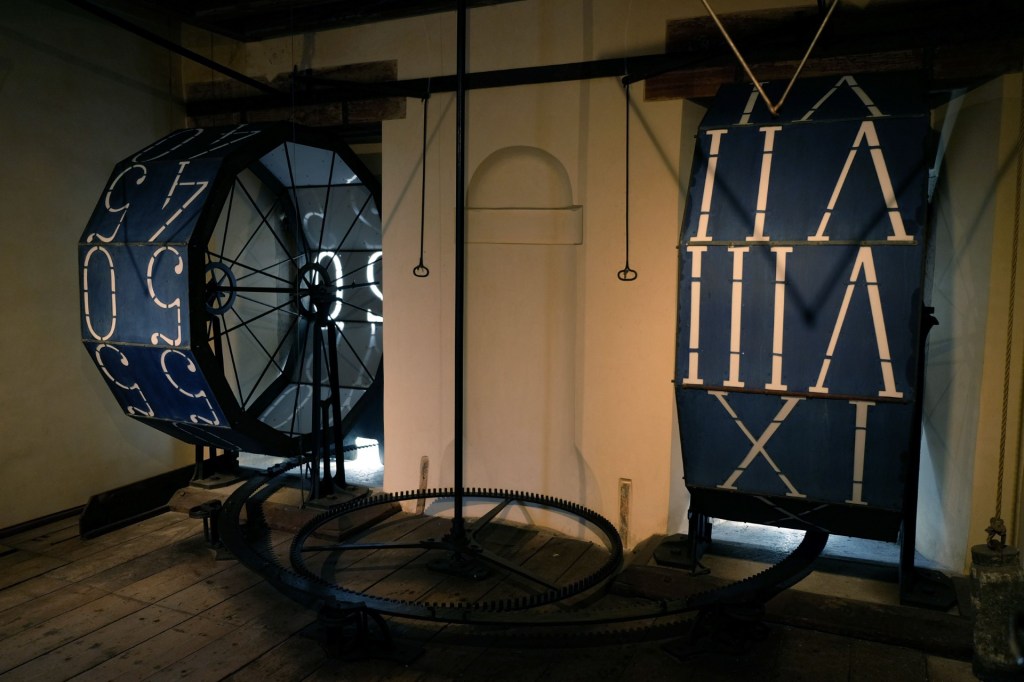
The guided visits happen on the hour a couple of times a day, in French, Italian or English. You can find the exact times here and book tickets via the MUVE wesbite here. The panoramic view from the terrace of the clocktower alone is worth the €14 entry fee. There is a reduced fee of €11 if you have the rolling unica.
2. Calle Varisco
I do slightly feel like I’m cheating adding this one because it has become quite popular of late. Calle Varisco is the most narrow street in Venice. From side to side there is just 53cm of space. There is just about enough space for a person with wide hips to fit through, my partner with his wide shoulders has to go through sidewards!
Squeezing two people down this alleyway, going in opposite directions is a very fun game noone wants to play.
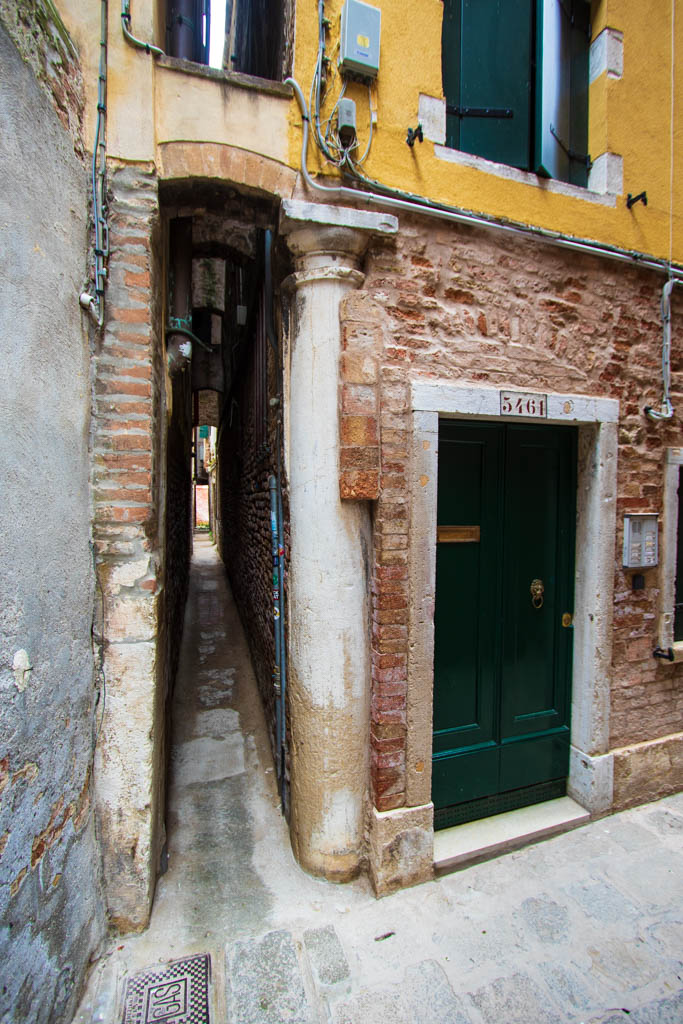
The calle is a fairly straightforward 5 minute walk from Fondamente Nove vaporetto stop. Thankfully these days it features as a searchable location on googles maps – but note it shows the end of the calle not the beginning.
3. Palazzo Tetta – the house facing water on 3 sides
A house surrounded by water, in Venice? “Groundbreaking” I hear you say. But in the case of Palazzo tetta it kinda is. Venetian houses usually only face the water on one side, if they’re hanging over a canal at all.
My old house in Castello for example didn’t touch water. If a house is on a corner it will face two canals, which many houses do but percentage wise it really isn’t many. So, to have a house surrounded by water on 3 sides is really quite unusual. In fact there’s only one – Palazzo Tetta.
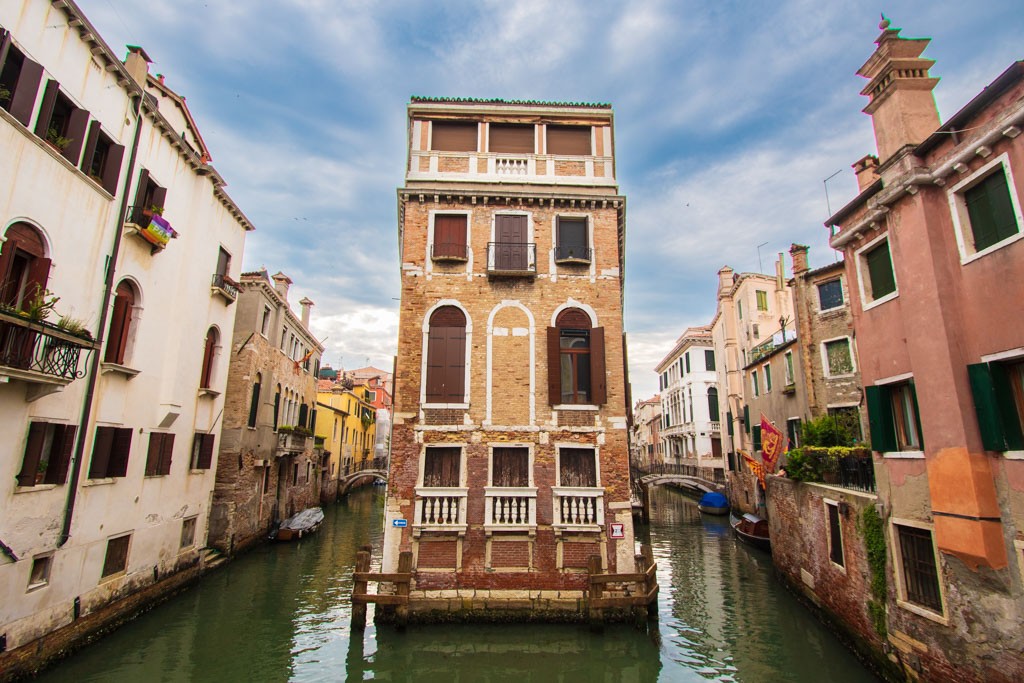
The spot to catch a view of Palazzo Tetta is from the Ponte dei Conzafelzi. This unusual site in Venice is just a short walk from Libreria Acqua Alta yet receives almost none of the attention of its more famous fellow landmark. It is such a gorgeous building and deserves more recognition.
4. Ponte del Lovo
The bridge itself isn’t the attraction, it’s the view from the bridge. Ponte del Lovo is said to be the only bridge in Venice with a view to the campanile di San Marco overlooking a canal. There are few places to see the campanile from ground level and this is one of them.
The campanile peeking out overtop of the rust coloured buidlings, with the reflection in the canal as a gondola passes under the bridge is possibly one of the most suggestive sights in Venice – a true picture perfect postcard shot.
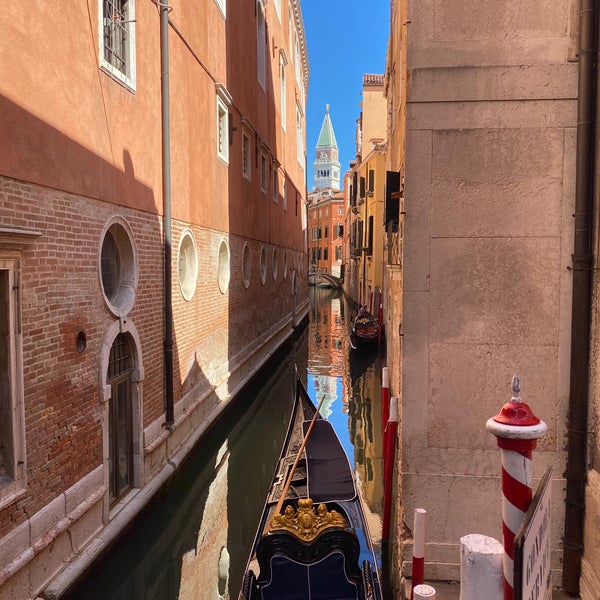
This small bridge is not far from Campo San Luca which makes it just a few minutes walk from Rialto Bridge. It’s also just 4 minutes walk from Scala Contarini del Bovolo – another unusual, albeit these days well known, site.
The bridge also has its own curiosity. Look up to the left and you’ll see a lombard niche that once used to house a statuette of Madonna- noone knows who took it, it simply vanished one day.
5. The submerged crypt of San Zaccaria
A crypt in a city built on water? Seems unlikely in the city where the only cellar was used to house prisoners, but it does exist. In the beautifully ornate church of San Zaccaria found very close to the waterfront along Bacino San Marco, you will find this oddity.
The church dates back to the 15th century, but there has been a church on the site since the 9th century.
The crypt was built sometime between the 10th and 11th centuries, so the tombs found in the crypt here are of those early doges. The burial basement features the columns and vaulted ceilings indicative of the times, which seem to elongate when reflected in the water, making it appear almost double.

The church moved slightly when it was rebuilt, so it is now actually underneath an adjacent chapel called San Tarasio.
To get to the crypt, you need to go through a door to the right of the entrance to the church that simply says ‘close the door behind you.’ Entry to the church and the crypt is €2.
Beware, though, when the water is too high, you cannot stand on the walkway in the crypt, and you’ll only be able to see it from the stairs at the opposite side of the room, approaching from the San Tarasio chapel. Sometimes they won’t let visitors in at all if the water is too high.
The church is super easy to find, take the narrow calle straight ahead as you exit Vaporetto stop San Zaccaria D (or take the left if you’re facing the monument to Vittorio Emmanuele ii). Walk along the street until you see the chirch on the left.
6. San Francesco della Vigna
If I told you there were vineyards in the middle of Venice, would you believe me? And if I told you not only were that true but they could also be found in the grounds of a church? Well, that’s the case with San Francesco della Vigna – the oldest urban vineyard in Venice.
If you’re interested in sampling the offerings search for “Harmonia Mundi”
San Francesco is more than just a church or vineyard. There is a cloister dedicated to collecting rainwater for the irrigation of the others and two dedicated to wine, as well as a little herb garden.
The onsite library catalogues and preserves some 30,000 specimens for the Venetian heritage library of the Province of San Antonio dei Frati Minori. The convent is also visitable, and 2 of the 3 cloisters form part of the biennale, where you can take in exhibitions from contemporary artists.
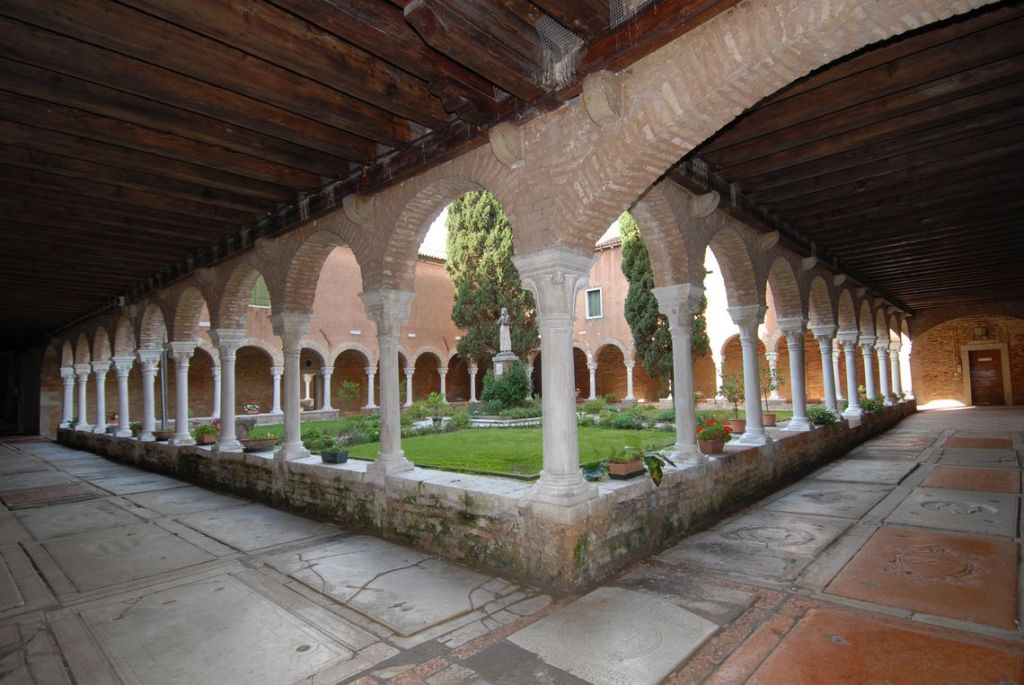
It is also a dreamy place to wander around in a floaty dress for some gorgeous pictures if you’re so inclined – as I am. Just look at those columns, that wooden ceiling, and those beautiful flagstone floors.
Visiting is a little complex, as everything is open at different times.
The church is visitable between 10 am – 12:30 pm and again from 3 pm till 5:30 pm, Monday to Sunday.
The library is open from 9 am to 5 pm on Monday, Wednesday, and Friday, while on Tuesdays and Thursdays, it’s only open until 1 pm. It doesn’t open on the weekends.
The nuns have differing hours still and are open from 8 am – 12:30 pm and again from 3 pm till 6 pm, Monday to Sunday.
There is no fee to enter any of the buildings that form the complex.
7. Ponte Chiodo
The only bridge in Venice with no parapets. Sounds a little boring, doesn’t it? But ponte chiodo harks back to bygone times when Venice was in its infancy.
Way back in the 5th century, when bridges were first being constructed between the islands that make up Venice, they were all being built without side protection – as can be seen from paintings dated to the 8th century. This changed sometime during the 800s when parapets began to be used and added to existing bridges for safety.
There is just one other example of a side-free bridge in the lagoon, and it is found on the island of Torcello – it’s called the ‘ponte del diavolo’. The story behind the name of that bridge deserves its own post!
Ponte Chiodo, meanwhile, can be found just a few meters from the Scuola Grande della Misericordia – also worth a visit for its beautiful showroom.
8. Borges labyrinth
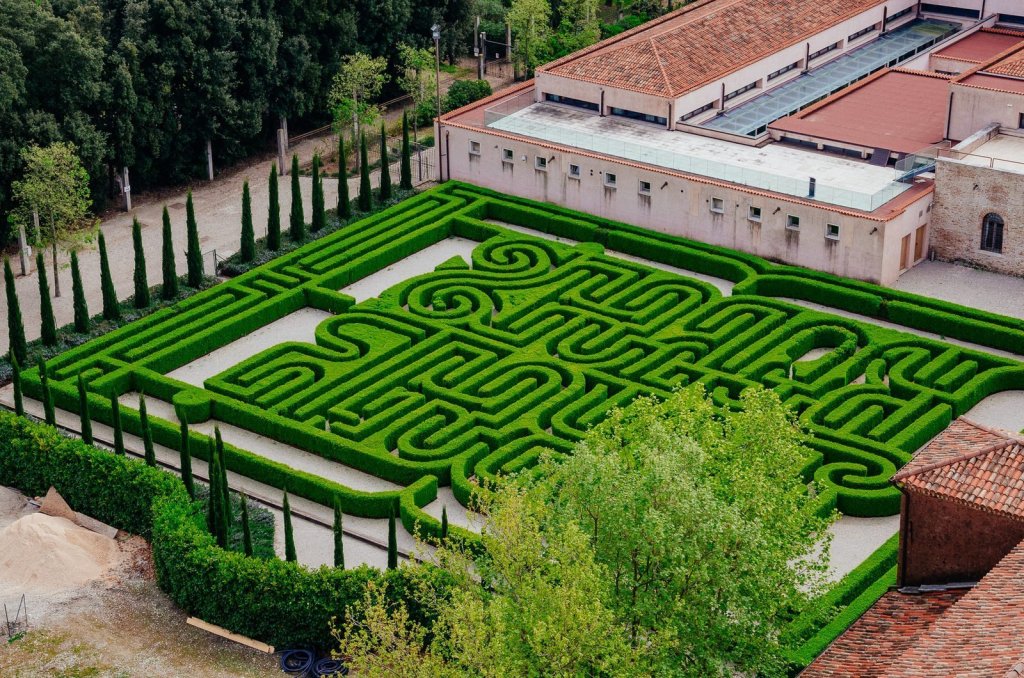
Found on the island of San Giorgio Maggiore, this masterpiece was chosen as one of the 10 wonders in the competition for the most beautiful park in Italy. The labyrinth was created in 2011 to honor Argentine writer Jorge Luis Borges. It is a tribute to his famous short story “The Garden of Forking Paths”.
It took 10 years for the gardens to finally open to the public.
Since 2021, it has been possible to visit the labyrinth and follow the path while listening to the music of Antonio Fresa performed by the orchestra of Teatro La Fenice on an audioguide.
If you view the labyrinth from the campanile San Giorgio, see if you can spot all the symbols ‘hidden’ in the labyrinth – Borges x2, an hourglass, a cane, question marks, infinity signs, MK – the initials of Borges’ wife Maya Kodama, and the number 86 – his age at death.
Randall Coet’s design is a true masterpiece!
You can get to San Giorgio Maggiore by taking the vaporetto line 2 from San Zaccaria; it is the first stop. The labyrinth can be visited by a guided tour lasting 45 minutes. The tours are available at 10:00, 13:00, and 16:00 Thursday through Tuesday throughout the high season – 14th April to 2nd November.
During the low season, tours are available at 10:30 and 14:30 Thursday through Tuesday. The labyrinth remains closed on Wednesdays throughout the year. Tickets cost €15 for adults, €13 for those over 65 and under 26, €5 for those under 14, and children under 5 go free.
You can do an extended tour visiting the whole of San Giorgio Maggiore – the Fondazione Giorgio Cini, the labyrinth, and the woods with the Vatican chapels and green theater. This Gold tour takes 2 hours and 50 minutes.
Tours are available on the hour, every hour between 10 am and 4 pm Thursday through Tuesday during high season, 14th April to 2nd November. During low season, tours are only available at 10:30 weekdays except Wednesday and at 10:30 and 14:30 on the weekend.
Tickets cost €28 for adults, €23 for those over 65 and under 26, €9 for those under 14, and children under 5 go free.
Book tickets in advance direct from the official website or via getyourguide.
9. Sottoportego Zurlin
We’ve already covered the narrowest street in Venice; now it’s time for the lowest sotoportego.
A sotoportego literally means “sotto portico,” which is the Italian term for a passageway underneath a building. The proclaimed ‘lowest passageway in Venice’ is only 1.69m high, making for some fun photo opportunities. It leads through to one of the cutest courtyards in Venice.
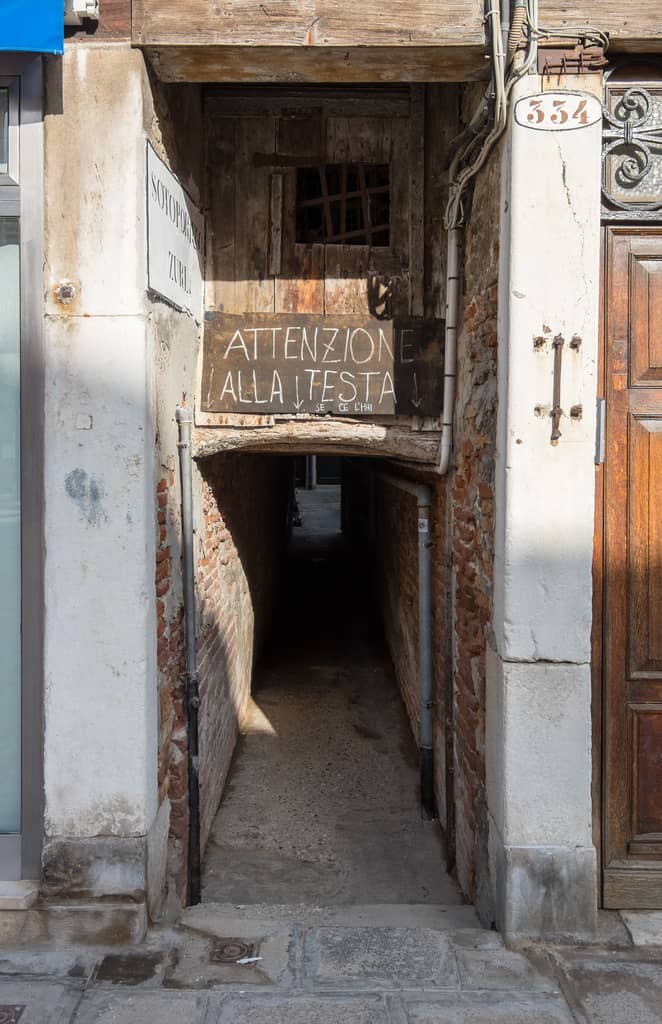
But did you know, despite being in the Guinness Book of Records, it is not actually the lowest sotoportego in Venice? There are actually two that beat Zurlin.
Sotoportego Zambelli in the sestiere of Santa Croce reaches just 1.68 at its lowest point (underneath the central beam). The lowest of the lowest is actually an unnamed sotoportego between Ramo del Rosa and Rio de San Cassan, measuring a measly 1.67 at its lowest point (it leans a little to one side).
Campo Zurlin likely has the title of the lowest because it is the longest and the only one that is consistent in height, or more likely because of the sweet ghost story attached to it.
Legend has it that one rainy night in 1929, a doctor was making his way home via Campo Ruga in Castello when he heard a pitiful voice calling out for help. The voice was coming from sotoportego Zurlin. The doctor approached the sotoportego and found a young, desperately thin, sickly-looking girl clutching a thin black shawl to keep her warm and dry. The doctor accompanied her home to find her mother in urgent need of care, which the doctor gladly gave.
Here’s where it gets eerie. The doctor realized the girl had gone missing while tending to the mother. When the mother finally awoke, the doctor told her of the daughter’s role in getting her help. The mother declared it impossible! For her daughter had been dead a month.
The mother did, however, find it strange the doctor knew of the shawl her daughter wore while still alive and showed it to the doctor, still hanging in the closet. When the doctor touched the shawl, he found it still damp. *shivers*
10. The market of the Guidecca women’s prison
So, this is a cheeky one to add because you can only come here for 3 hours one day a week, but if you happen to be in Venice on a Thursday morning, it is absolutely worth a visit.
The inmates of Venice’s women’s prison on Giudecca Island grow a medley of fruits and vegetables in their garden in the ex convento delle convertite. Every Thursday from 9 am to midday, the ladies sell their produce outside of the entrance to the prison on Fondamenta Sant’Eufemia.
You’ll need to get there early; it’s well appreciated by locals because of the super cheap prices and the generosity of the ladies – they don’t even charge for the herbs.

If you’re not here on Thursday but you enjoy supporting local enterprises like prison initiatives to help rehabilitate inmates, you can head to their shop Malefatte Boutique in Fondamente Frari, just behind the Basilica dei Frari.
You can pick up all kinds of bags made with recycled advertising banners, cosmetics made in the women’s prison laboratory, and bags and t-shirts printed in the silkscreen lab of the Santa Maria Maggiore Men’s Prison.



If you can’t get to the store, you can always support the ladies and gents by buying online. Their products make great gifts; everything is cruelty-free and made in as green a way as possible. Buy here
11. The door without a lock
The doors of Venice are some of the most Instagrammable backdrops in Europe – there are entire tours and webpages dedicated to the photogenic, unique doorways of Venice – in fact, you’ll find one here. I think doorways make for wonderful souvenir photos, especially in Europe as there is such a wealth of interesting and photogenic doors.
The most famous door in Venice is probably the blue door of Ca’ da Mezzo, which is now so famous it even has a Google Maps tag. But the most interesting door, to me at least, is the door with no lock. It is a gorgeous green steel door with no handles and a secret lock.
University students at Ca’ Foscari consider solving the mystery of the door with no lock a rite of passage that will ensure great success while at university.
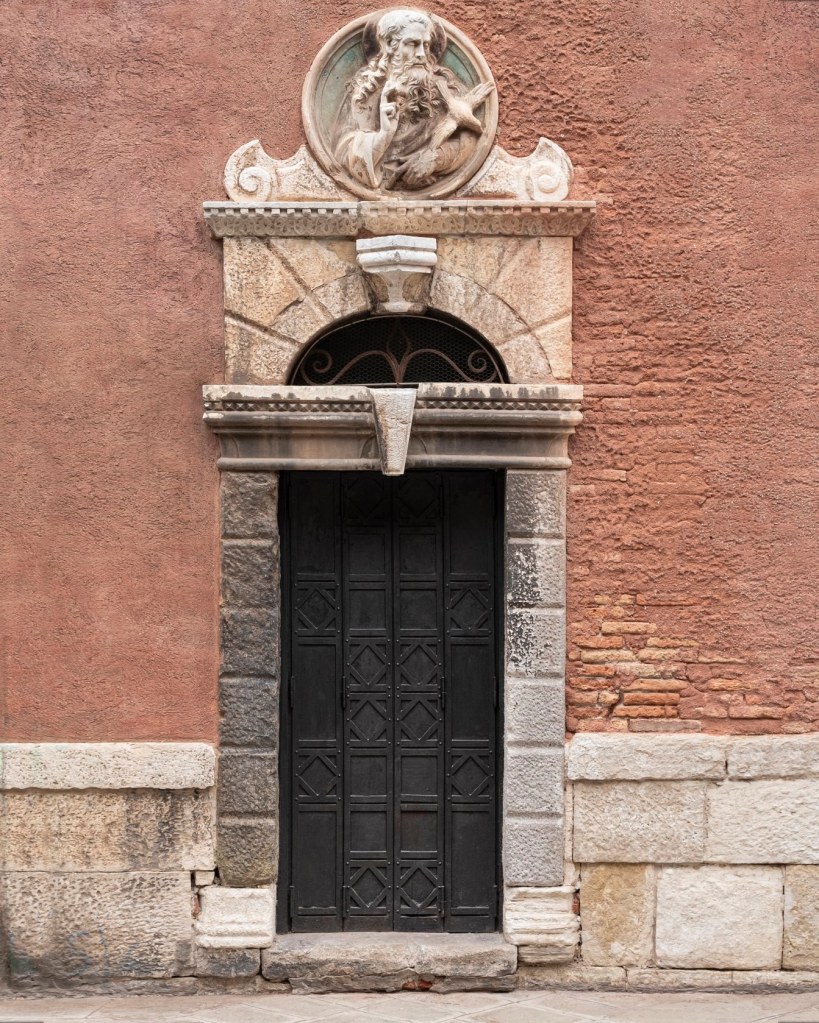
You can find the door at the church of San Vidal, just a few short steps from the Accademia Bridge. See if you can solve the mystery.
12. The house of Boia
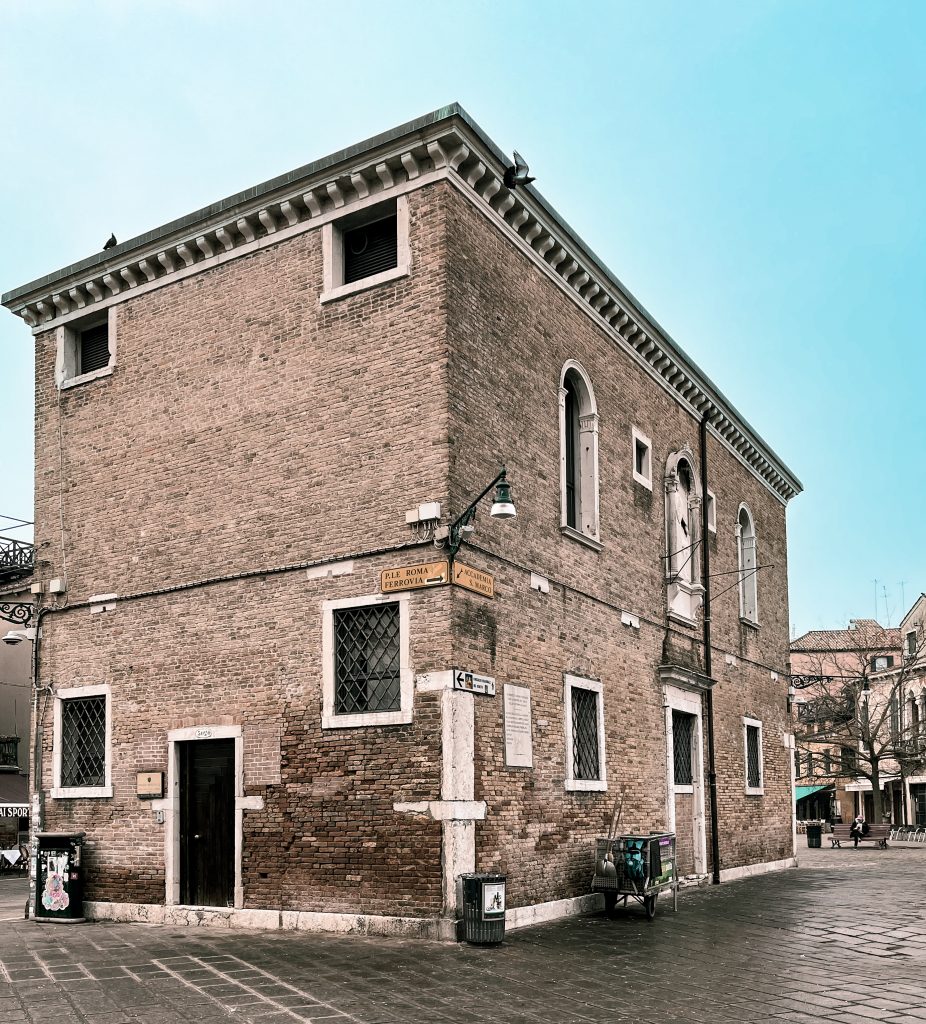
In the campo Santa Margherita, according to legend, there lived a very prolific executioner. The plaque dedicated to the women’s quarantine hospital once situated there is reported to be the way the executioner received messages about future beheadings, so he would know to be free.
In reality, it was once a furrier and tannery. But legends are always way more fun.
The house of the executioner is particular. It is the only house in Venice that does not have a canal on any side, nor does it have a neighbor.
It wasn’t always like this. During its time as a tannery, the building was separated at the back by a canal with two branches, one being today’s Rio terà della Scoazzera and the other Rio terà Canal. Eventually, these were filled in and became the streets that exist today.
The tannery became a school ‘Scuola dei Varoteri’ – a name that developed from the building’s history with furriers.
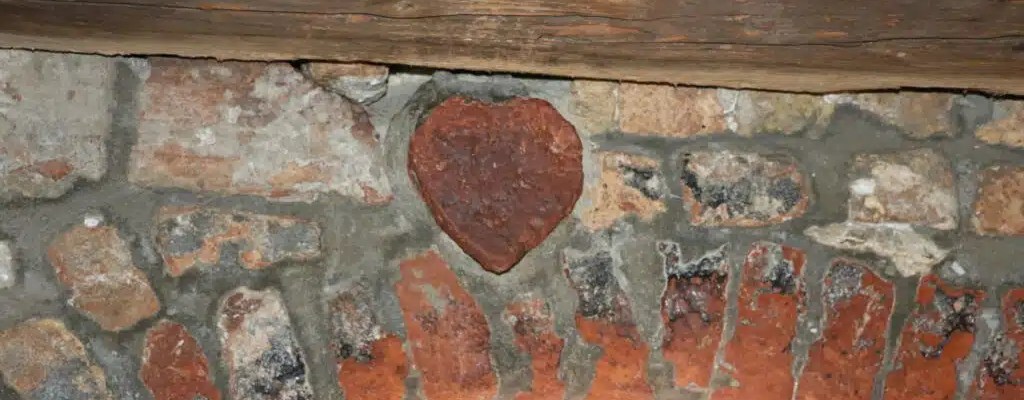
13. The heart stone
Near the church of San Giovanni in Bragora, in Castello, there is a sotoportego that is pretty famous among lovers.
On the backside of the sotoportego, you’ll see a single red brick in the middle, vaguely shaped like a heart. It is said that if two people touch the brick heart, the relationship will never fail. If one person touches it, their dreams of true love will come true within a year.
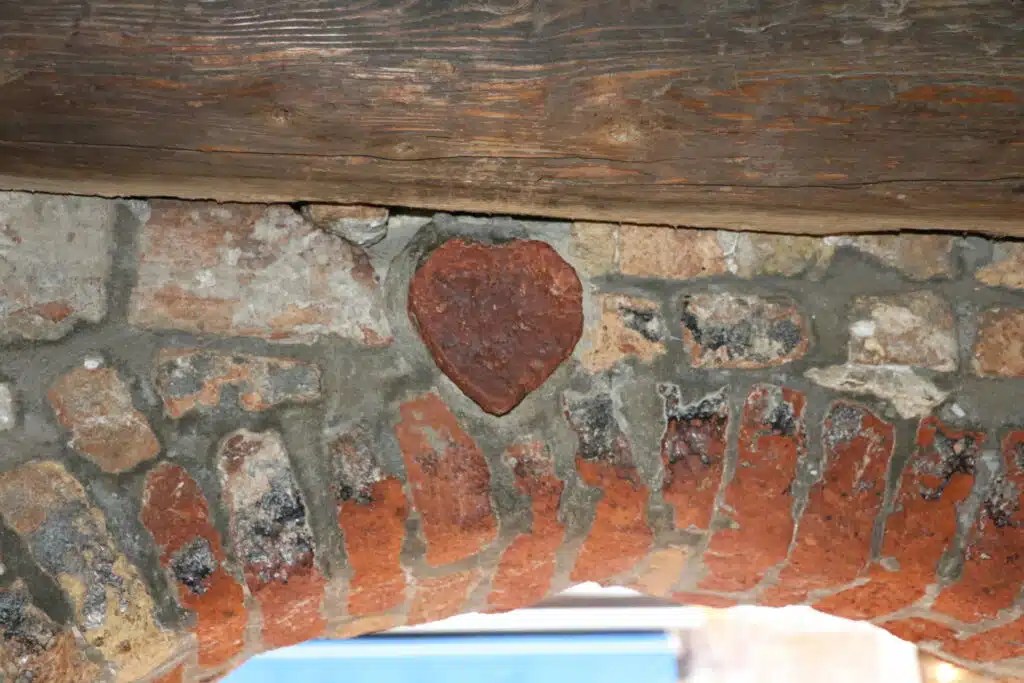
Like all Venetian places of interest, there is a legend attached. This legend goes: a fisherman named Orio lived at the end of the sotoportego. One day while he was fishing, he heard a voice asking for help; astonished, he discovered a siren entangled in his net, named Melusina.
The two fell in love, but she had been struck by a curse: every Saturday she turned into a snake. The curse was broken when Melusina married Orio. They went on to have three children, and all was happy until Melusina became ill and died.
Orio was heartbroken and struggled as a single father, but whenever he left for fishing, he would return to find the house in order. One day he returned early and found a snake in the house; he immediately killed the snake, fearing for his children. From that day on, his house was always a mess.
To commemorate the story, a red heart was placed where the lovers’ house once stood. Will you and your beloved touch the stone whilst you are in Venice?
How many of these egms have you already discovered on your adventures in Venice? Will you be adding any to your list of ‘must sees’ on your future escapades here? Let me know in the comments below.
 type1travels.co.uk